Choosing the right Binder Spreader in 2026 requires more than comparing hopper size and advertised price. Global buyers must connect machine design with soil conditions, crop schedules, transport limits, and local service capacity. A spreader that performs well on a dry European farm may struggle in wet fields or uneven terrain elsewhere.
This guide examines practical buying factors from a field-use perspective. It considers spreading consistency, working width, payload, PTO or hydraulic requirements, corrosion protection, tire selection, and unloading control. Small details matter. A reinforced floor chain can reduce downtime. A sealed bearing can protect performance during muddy seasons. Clear calibration data helps operators apply material more evenly and avoid costly waste.
Supplier reliability also deserves close attention. Buyers should request operating videos, maintenance records, spare-parts lists, warranty terms, and measurable performance data. Certifications and technical documents must match the destination market and equipment configuration. Product brochures can look convincing. They do not always reveal how a machine behaves after months of heavy use.
No single Binder Spreader fits every region. That is the difficult part. Budget forecasts should include freight, import procedures, training, wear parts, and after-sales support. A cheaper unit may become expensive when a critical chain or gearbox is unavailable. Likewise, a premium model may not justify its price on smaller farms. This buying guide offers a structured, evidence-minded approach, while recognizing that field conditions can expose weaknesses no catalog can predict. Careful questions remain essential.
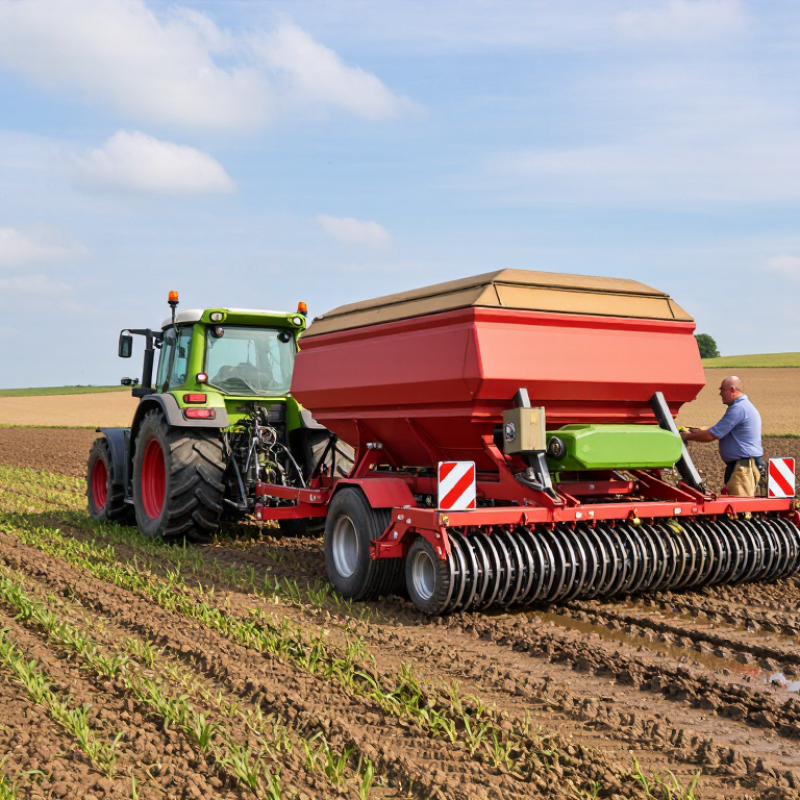
Binder spreaders apply bitumen or asphalt emulsion at controlled rates. Common types include truck-mounted distributors, trailer units, and compact self-propelled sprayers. Truck-mounted models suit highways and large surface-dressing projects. Smaller units work better on urban repairs, narrow lanes, and irregular shoulders.
Typical uses include prime coats, tack coats, chip seals, and surface dressing. Key 2026 terms include residual binder rate, spray-bar width, nozzle overlap, application temperature, and digital calibration.
Residual rate describes the binder left after water or solvent evaporates. This figure matters more than the initial emulsion volume. The European Asphalt Pavement Association reported approximately 275 million tonnes of asphalt mixture production in Europe in 2023. That scale makes accurate binder distribution operationally important.
Buyers should request test certificates, calibration records, pump capacity, and nozzle specifications. FHWA pavement-preservation guidance also stresses surface preparation, weather control, and uniform application. A clean spray bar matters. So does operator training. In practice, advertised precision may decline when material viscosity changes or nozzles partially clog. I would not compare machines using tank volume alone. A larger tank can increase downtime if filling, heating, or cleaning is slow. Terminology also varies between regions, and “binder spreader” may describe different equipment. That ambiguity deserves clarification before quotation.
For global buyers, binder spreader selection should begin with field conditions, not brochure numbers. In 2026, three specifications deserve close attention: hopper capacity, spreading width, and kg/ha output. A larger hopper reduces refilling stops, but it also increases axle load and soil compaction. Measure your tractor’s lift capacity, transport limits, and typical field distance before choosing. Real work is less tidy than catalog testing.
Hopper capacity should match daily application volume and available loading equipment. A 1,000-kilogram hopper may suit medium fields, but only if the tractor remains stable on slopes. Spreading width affects both productivity and overlap. A 12-meter pattern can cover ground quickly, yet wind may create uneven edges. Check the effective width, not only the advertised maximum. During a field trial, mark two passes and inspect the seam between them. Small gaps can become costly material losses.
The kg/ha setting is the most important control for consistent application. Calibrate with the actual binder, because moisture, particle size, and density change flow rate. Weigh material collected over a measured distance, then adjust the gate and travel speed. Use this simple check: applied kilograms divided by treated hectares. Repeat the test at low and high settings. I once trusted a factory scale too quickly; the field result was uneven. That mistake taught me to record speed, gate position, weather, and batch details. Buyers should request calibration data, service access, and clear tolerances before ordering. A machine that spreads fast but cannot hold the target rate is not efficient.
For global buyers, binder spreader performance begins with accurate metering, not impressive hopper capacity. The machine must deliver a stable application rate across changing field conditions. A small calibration error can create weak coverage, wasted material, or uneven road strength.
Before work starts, operators should weigh a measured discharge over a fixed distance. Compare the result with the controller’s displayed rate. Repeat the test at low, medium, and high settings. Belt speed, gate opening, binder density, and material moisture can all change the result. Keep a written calibration record for each material. Short tests matter.
Field experience shows that speed compensation needs careful checking. If forward speed rises, the system should increase discharge proportionally. Watch the actual spread pattern, not only the screen. Uneven bands often reveal bridging, vibration, or delayed gate response. A clean sensor does not guarantee accurate application. That assumption deserves questioning.
Buyers should request calibration procedures, rate tolerance data, sensor specifications, and service instructions before purchase. Ask how the machine handles start-up and stopping, where over-application commonly occurs. Test the spreader with the intended binder, because laboratory settings may not match field behavior. Digital controls improve repeatability, but operators still need training and judgment. Mistakes remain possible. Record them, investigate them, and adjust the process.
For global buyers, a binder spreader should be judged beyond capacity, output rate, and steel thickness. ISO 4254-1 provides general safety principles for agricultural machinery, including guarding, access, controls, stability, and residual risks. It is not a product certificate. Ask the supplier for the applicable risk assessment, operating instructions, and safety verification records for the actual machine configuration. A spreader may look strong yet expose moving chains or create unsafe access during cleaning.
CE marking matters when the spreader is placed on the European Union market. It shows that the manufacturer declares conformity with applicable EU requirements. Supporting evidence should include technical documentation and an EU Declaration of Conformity. Check the exact model, serial range, applied directives or regulations, and responsible economic operator. Never accept a CE logo alone. Review PTO guarding, emergency controls, warning labels, lighting, noise information, and stability during loading. Road-use and electrical rules may add requirements beyond CE obligations.
Tips: Request photos of guards, shaft shields, discharge controls, and service points. Compare the manual with the delivered machine. Test controls before spreading material. Keep training and maintenance records. Paperwork can be incomplete. Buyers sometimes miss one small pinch point. That weakness deserves attention. If the supplier cannot explain a safety function clearly, pause the purchase and seek an independent assessment.
A 2026 binder spreader should match the tractor, not merely the advertised capacity. Check PTO speed, hydraulic flow, three-point or drawbar limits, tire clearance, and loaded tongue weight. A 90-horsepower tractor may handle a small spreader, but wet material can quickly exceed its braking and traction limits. Test the combination on a slope, if possible. Real conditions expose mistakes.
Total cost of ownership deserves closer attention. USDA ERS projected U.S. farm production expenses above 450 billion dollars in recent farm-sector forecasts, making fuel, repairs, and downtime important buying factors. Compare fuel use per loaded acre, scraper and chain replacement intervals, corrosion protection, and resale value. OECD-FAO Agricultural Outlook 2024–2033 expects global agricultural output to grow about 1.1% annually, increasing pressure for reliable field productivity. Cheap equipment can become expensive when one failed bearing stops spreading during a narrow application window.
Warranty terms should state coverage periods, excluded wear parts, labor rules, and transport responsibility. Ask for written response times. After-sales support matters more than polished brochures. Confirm local parts stock, technician training, diagnostic access, and seasonal emergency service. Keep a sample parts list before ordering: chains, sprockets, bearings, hydraulic hoses, and floor components. One weakness remains easy to miss: many buyers compare purchase prices but do not record downtime costs. That gap deserves honest review.
Buyer evaluation scores are normalized on a 100-point scale across four practical procurement criteria. Tractor compatibility and five-year total cost of ownership receive the highest weighting because they directly affect productivity, operating risk, and long-term value.
Use this benchmark as a screening tool: confirm PTO horsepower, hitch category, hydraulic requirements, local parts availability, warranty terms, service response time, and expected maintenance costs before purchasing.
Match capacity to daily application volume and loading equipment. A 1,000-kilogram hopper may suit medium fields. Confirm tractor stability on slopes. Larger hoppers reduce refilling, but increase axle load and soil compaction.
Wider coverage can improve productivity. However, wind may create uneven edges. Check effective width, not just the advertised maximum. Mark two passes and inspect the overlap seam.
Calibrate with the actual binder. Moisture, particle size, and density affect flow. Weigh material collected over a measured distance. Divide applied kilograms by treated hectares. Repeat tests at low and high settings.
Check PTO speed, hydraulic flow, lift or drawbar limits, tire clearance, and loaded tongue weight. Wet material can exceed traction and braking limits. Test the machine on a slope when possible.
No. Horsepower is only one factor. A 90-horsepower tractor may still struggle with wet material. Stability and braking matter more than a simple capacity claim.
Compare fuel use per loaded acre, repair intervals, corrosion protection, downtime, and resale value. Track chain, scraper, bearing, hose, and floor-component replacement. A cheap machine can become expensive quickly.
It should state coverage periods, excluded wear parts, labor rules, and transport responsibility. Request written response times. Vague warranty language creates avoidable uncertainty.
Confirm local parts stock, technician training, diagnostic access, and seasonal emergency service. Keep a sample parts list before ordering. Support matters after delivery. This is easy to underestimate.
This 2026 buying guide explains the fundamentals of a Binder Spreader, including common machine types, agricultural uses, and essential market terminology for global buyers. It outlines how to compare hopper capacity, spreading width, and application output measured in kg/ha, helping buyers match equipment performance with crop, material, and field requirements. The guide also highlights metering performance, calibration accuracy, and application-rate control as key factors for achieving consistent distribution and reducing material waste.
For safe and reliable purchasing, buyers should review ISO 4254-1 safety requirements and applicable CE marking obligations, while confirming tractor compatibility, power needs, attachment systems, and operating conditions. A complete evaluation should include total cost of ownership, maintenance needs, warranty coverage, spare-parts availability, operator support, and after-sales service. By assessing both technical specifications and long-term support, global buyers can select a Binder Spreader that delivers dependable performance, efficient operation, and compliance with relevant market requirements.

HME Machinery