Choosing the right Aggregate Spreading Machine can shape project costs, material quality, and daily productivity. Global buyers often compare capacity, spreading width, operator controls, maintenance access, and transport requirements. A machine that performs well on a dry quarry road may struggle on wet farmland or uneven construction sites.
This guide examines seven leading aggregate spreading machines for different purchasing conditions. It considers practical details, including hopper size, conveyor design, discharge accuracy, tire configuration, and compatibility with trucks or loaders. Buyers can also assess fuel use, spare parts availability, warranty support, and local technician coverage. These factors matter when a machine operates thousands of kilometres from its manufacturer.
Real work reveals more than brochures.
A compact spreader may suit narrow roads, while a high-capacity model can reduce loading interruptions on major infrastructure projects. However, larger equipment usually demands stronger transport planning, wider access routes, and higher operating budgets. Specifications alone cannot guarantee reliable results. Material moisture, aggregate size, operator training, and site preparation also influence performance.
No shortlist is perfect. Some published performance figures depend on ideal testing conditions, so buyers should request field references and verified operating data. The following selection offers a practical starting point, not a universal ranking. Careful comparison can help importers, contractors, and distributors choose equipment that matches local conditions, service resources, and long-term project demands.
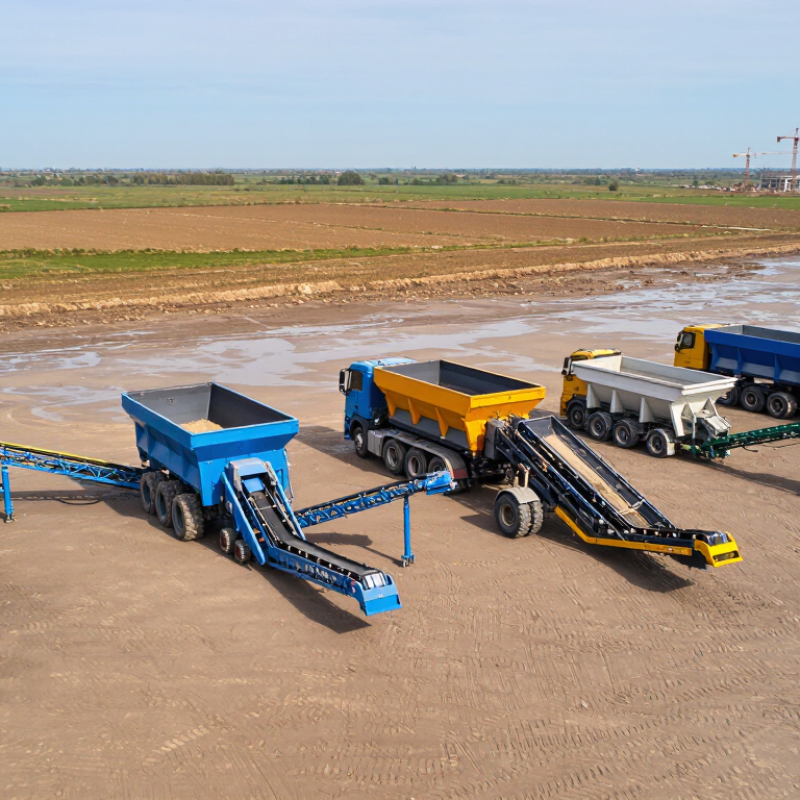
7 Best Aggregate Spreading Machines for Global Buyers
Aggregate spreader types differ greatly when materials range from fine screenings to 63 mm stone. A belt conveyor spreader offers steady coverage and handles mixed aggregate well. Its adjustable belt speed helps control thickness. A twin-auger spreader works effectively in damp materials, although oversized stones may bridge inside the hopper. A spinner-disc spreader delivers wider patterns and suits granular aggregate. However, uneven particle shapes can create noticeable edge variation.
A drop-bottom spreader releases material through controlled gates. It is useful for short, precise passes and consistent road shoulders. A rear tailgate spreader uses the vehicle bed and simple hydraulic control. It remains practical for smaller projects, but manual adjustment can reduce accuracy. A side-discharge conveyor spreads material beside the machine, helping work near barriers, drains, and narrow lanes. Clearance matters here. Large stones need generous openings and reinforced wear surfaces.
A windrow spreader places aggregate into a narrow, continuous line before grading or paving. It supports efficient material placement on long work sections. For 0–63 mm applications, buyers should check hopper geometry, gate size, drive torque, and cleanout access. Moisture changes flow behavior quickly. I have seen a well-sized machine outperform a faster one because it prevented blockages. No design is perfect. Calibration on the actual aggregate remains essential.
For global buyers, the seven best aggregate spreading machines cover different production needs. Compact hopper spreaders usually hold 3–6 m³ and suit road repairs, landscaping, and narrow sites. Medium machines offer 8–15 m³, balancing mobility with steady loading. Heavy-duty units can reach 20–30 m³ for quarries, large roads, and continuous stockpile work.
Rated material output commonly ranges from 50 to 1,000 t/h. However, published capacity is not always practical capacity. Moisture, aggregate size, conveyor speed, and loading delays can reduce performance. A 50–150 t/h machine may fit smaller contractors. Systems producing 200–500 t/h support regular infrastructure projects. The largest 600–1,000 t/h machines require reliable loaders, wide access routes, and strong site coordination. Otherwise, the hopper waits empty. That mistake is common.
Tips: Compare usable hopper volume, not only advertised volume. Ask for output tests using your actual aggregate size and moisture level. Check discharge accuracy at low speed. It matters near curbs and drainage channels. Inspect belt access, wear parts, emergency stops, and cleaning points before purchase. Operators should also measure fuel use and loading time during a real shift. I have found that simple maintenance access can matter more than impressive peak output. A machine may look efficient on paper, yet perform poorly when dust builds around the conveyor. Local service support and spare-part availability should influence the final choice.
7 Best Aggregate Spreading Machines for Global Buyers
Choosing among the seven best aggregate spreading machines starts with application accuracy. Machines with 2–6 m working widths suit road shoulders, construction sites, and landscaping projects. Narrow settings help operators control material near edges. Wider settings improve productivity on open surfaces. Hopper spreaders offer steady delivery, while spinner systems cover larger areas faster. Belt-driven designs often handle damp aggregate more consistently. Still, material size and moisture can change the result.
A reliable machine should provide ±10% application control under suitable conditions. This range depends on gate adjustment, travel speed, and aggregate density. Operators should calibrate the machine before each material change. Small stones may flow differently from sand. A simple weighing test can reveal uneven discharge.
Tips: Start narrow. Measure twice. Run a short test strip before full application. Check the spread pattern from several angles. Keep written settings for future jobs. Do not trust the dial alone. I have found that visual checks sometimes expose errors that controls miss. That is an imperfect step, but it prevents expensive rework.
For global buyers, consider transport dimensions, local service access, and spare-part availability. A machine that spreads accurately but stops frequently is not efficient. Look for corrosion-resistant components when working in wet climates. Confirm that calibration instructions are clear for local operators. Some specifications appear impressive, yet field performance may vary. Ask for test data using aggregate similar to your own. The best choice balances width, control, maintenance, and real working conditions.
Choosing among the seven best aggregate spreading machines requires more than comparing hopper size or spreading width. Global buyers should examine compliance documents before reviewing productivity figures. A truck-mounted spreader may suit highway shoulders, while a belt-fed machine can deliver steadier flow on confined sites. Tow-behind and self-propelled models offer different transport and maneuverability benefits. Spinner, conveyor, precision, and heavy-duty spreading systems also need different checks.
For European projects, CE marking should be supported by a Declaration of Conformity and clear technical files. ISO 12100 helps verify that designers identified crushing points, unexpected movement, dust exposure, and maintenance hazards. Operators should find guarded drives, emergency stops, readable controls, and practical isolation procedures. EN 13043 concerns aggregates used in asphalt mixtures and surface treatments, not the machine itself. The spreader must handle the specified grading, moisture, and application rate without excessive segregation.
For United States operations, EPA Tier 4 requirements may apply to diesel engines, depending on power rating, model year, and equipment use. Request engine emission labels, test information, and maintenance requirements. Regional rules can add noise, dust, transport, or reporting obligations. A certificate alone is not enough. I have seen neat document folders hide unclear translations and missing service intervals. That deserves a second look. Measure actual output in local aggregate conditions, record calibration results, and confirm that safety instructions match the delivered machine. Small paperwork gaps can become expensive field delays.
7 Best Aggregate Spreading Machines for Global Buyers
Choosing among the seven best aggregate spreading machines starts with payload, not appearance. Single-axle units suit narrow rural roads and lighter stone loads. Tandem-axle machines carry more material but need stronger surfaces and wider turning space. Truck-mounted spreaders work well for long hauls. Conveyor-fed models offer better control beside curbs or drainage channels. The US EPA AP-42 report identifies vehicle weight, surface silt, speed, and moisture as major dust factors. That matters on dry, unpaved sites. A heavy machine can increase dust and rutting.
Moisture changes spreading accuracy. Damp aggregate may bridge inside a hopper, while very dry material can scatter beyond the target line. The EPA NONROAD model links fuel use with engine power, load factor, and operating hours. Therefore, a larger engine is not automatically better. Hilly terrain requires traction, ground clearance, and stable braking. Wet clay may defeat a machine that performs well on compacted gravel. I have seen buyers overestimate payload and underestimate access width. That mistake becomes expensive quickly. Fuel records should be measured per tonne moved, not only per hour.
Tips: Request a wet-material test before purchasing. Check hopper capacity against actual bulk density, not catalog volume. For mixed terrain, compare loaded climbing speed and tire pressure options. Ask for noise, emissions, and service data from independent testing. The European Environment Agency reports that road transport remains a major source of urban emissions, so unnecessary empty travel deserves attention. A smaller machine may be slower, yet more efficient on short, repeated routes.
Buyer selection should match payload capacity, aggregate moisture, terrain conditions, and fuel consumption. The chart compares representative operating values for common machine configurations; actual results vary with material density, travel speed, spreading width, and site conditions.
Selection guide: Higher payload improves productivity on long haul routes, while lower fuel use is generally preferred for smaller loads, soft ground, or frequent stop-and-start work. Moisture above approximately 8–10% may reduce flow consistency and should be considered when choosing hopper and spreading controls.
A belt conveyor spreader usually provides steady coverage for mixed stone and fine screenings. Adjustable belt speed helps control layer thickness. Check belt width and hopper clearance carefully.
Yes, twin augers can move damp material effectively. Oversized stones may bridge inside the hopper. Hopper geometry matters more than advertised capacity.
It suits granular aggregate requiring a wider spreading pattern. Uneven particles can create irregular edges. The final pattern may need field adjustment.
It works well during short, controlled passes. Operators can place material accurately on road shoulders. Gate timing still affects consistency.
It can suit smaller jobs because it uses the vehicle bed and simple hydraulic controls. Manual adjustment may reduce accuracy. Practical, but not perfect.
It helps place aggregate beside barriers, drains, and narrow lanes. Clearance matters. Large stones require wide openings and reinforced wear surfaces.
It places aggregate in a narrow, continuous line before grading or paving. This can improve placement efficiency on long sections. Windrow width must match the next operation.
Check gate size, drive torque, hopper shape, cleanout access, and wear protection. Moisture can change material flow quickly. A slower machine may perform better by preventing blockages.
Request CE-related documentation, a Declaration of Conformity, and clear technical files. Review guarded drives, emergency stops, readable controls, and isolation procedures. A certificate alone is not enough.
Confirm whether applicable engine emission requirements depend on power rating, model year, and equipment use. Request emission labels, test information, and maintenance details. Regional dust, noise, and transport rules may also apply.
Choosing the right Aggregate Spreading Machine requires a clear understanding of material, output, and operating conditions. This guide reviews seven practical spreader designs for aggregate sizes from 0 to 63 mm, covering applications from road construction and landscaping to maintenance projects. Hopper capacities range from 3 to 30 m³, while material output can reach approximately 50 to 1,000 t/h, depending on the machine configuration and aggregate characteristics.
Spreading performance is compared through working widths of 2 to 6 m and application control of approximately ±10%, helping buyers evaluate coverage consistency and material efficiency. The guide also explains key compliance considerations, including CE marking, ISO 12100 risk assessment, EN 13043 aggregate requirements, and EPA Tier 4 emissions expectations where applicable. Final selection should match payload, aggregate moisture content, terrain, required precision, transport conditions, and fuel-use targets.

HME Machinery