How to Choose Sealing Road Equipment for Global Buyers

Time:2026-09-20 Author:Aria
0%

Choosing Sealing Road Equipment is a maintenance decision, not simply a machinery purchase. The equipment must match pavement type, crack width, sealant chemistry, climate, and daily production targets. FHWA Highway Statistics 2022 records more than four million public road miles in the United States. That scale shows why small sealing failures can create expensive maintenance cycles.

Professional guidance supports preventive treatment. FHWA pavement-preservation publications emphasize cleaning, routing, heating, and sealing cracks before water accelerates pavement damage. ASTM D6690 also provides performance requirements for hot-applied, rubberized asphalt joint and crack sealants. These references help buyers compare machines against measurable requirements, rather than attractive brochures.

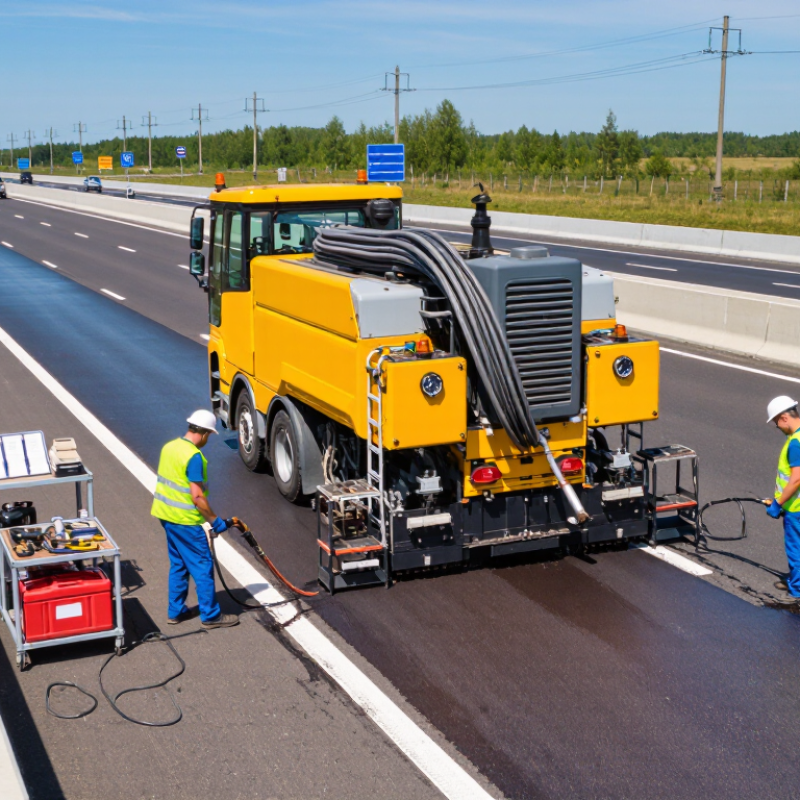
Look closely at the working scene. A contractor may need a melter that maintains stable temperature beside a dusty highway. A wand should deliver smooth, controllable flow. A powerful compressor is useless if the hose blocks during a cold morning shift. OECD/ITF Transport Outlook 2023 also highlights growing pressure on transport infrastructure, making reliable maintenance equipment increasingly important for road agencies and contractors.

The best choice depends on evidence. Ask for heating curves, pump capacity, fuel consumption, calibration records, spare-parts availability, and operator training. Check whether the manufacturer has documented field experience in similar climates. One overlooked detail matters: local voltage, fuel quality, and transport restrictions can change total ownership cost.

No machine is perfect. I have seen specifications look impressive until cleaning became slow and unsafe. Global buyers should test a sample unit, inspect welds and controls, and question every claimed output. A practical procurement process protects budgets, road users, and the pavement itself.
How to Choose Sealing Road Equipment for Global Buyers

What Sealing Road Equipment Is and Where It Is Used

Sealing road equipment is a group of machines used to protect pavement joints, cracks, and damaged edges. It prepares, heats, pumps, and applies sealing materials. Typical systems include crack routers, melters, pressure applicators, and spray injection units. Some machines use hot-applied sealant. Others support cold-pour materials. That difference matters.

On asphalt roads, crews seal narrow cracks before water enters the base layer. A heated melter keeps material flowing through a hose and wand. Bridge decks often require precise application around joints and drainage details. Parking areas benefit from compact equipment that can move between parked vehicles. Airport pavements demand accurate work, clear operating procedures, and strict maintenance records. Rural roads may need simple, durable units because service access can be limited.

Climate changes the choice. Hot regions demand reliable temperature control and heat-resistant components. Cold regions need materials and pumps that perform without excessive hardening. Moisture control is essential. Global buyers should match equipment capacity with daily repair volume, crew size, and local sealant requirements.

Check heating range, pump pressure, hose length, power supply, and cleaning procedures. Ask for test records and operator instructions, not only catalog figures. Yet specifications can mislead. A large tank is not automatically better for narrow urban work. I would also question equipment that seems perfect on paper. Site access, operator training, spare parts, and electrical compatibility can change the result.

One detail is often missed: replacement hoses and seals should be locally obtainable. That omission can stop a repair crew.

Key Equipment Types and Their Working Principles

Choosing sealing road equipment starts with the defect, not the catalogue. Crack-sealing kettles heat polymer-modified sealant, then pump it through a wand into cleaned joints. Spray-injection patchers combine compressed air, emulsion, and aggregate. Air removes loose material, while the binder locks new stone into the cavity. Infrared heaters soften aged asphalt before recycling it with fresh mix. Heat matters.

For larger networks, slurry seal and micro-surfacing machines blend emulsion, graded aggregate, water, and additives through a calibrated pugmill. The mixture spreads through a controlled box, forming a thin wearing layer. NCHRP Synthesis 422 documents how transportation agencies use preservation treatments according to crack severity, traffic, and climate. FHWA pavement-preservation guidance also stresses preparation and drainage, not equipment capacity alone. A fast machine cannot repair contaminated cracks.

Global buyers should compare pump accuracy, aggregate tolerance, heating control, spare-part access, and operator training. ASTM specifications help verify sealant and emulsion performance, but local test results remain essential. A unit designed for dry, mild conditions may struggle beside a humid coastal road. Check nozzle cleaning after a full shift. Check fuel use under working load. The World Bank’s road-sector data repeatedly links poor maintenance with higher user costs, although equipment productivity is only one part of that relationship. I have seen buyers overvalue output figures and underestimate cleaning time. That is an expensive mistake. Small details matter.

How to Choose Sealing Road Equipment for Global Buyers

Key equipment types and their representative working-width ranges

The figures show representative working or coverage widths used in common road-maintenance configurations. Actual dimensions vary with road design, material specifications, local regulations, and machine configuration. Crack-sealing equipment is measured by its sealant application or overband width rather than full-lane coverage.

Crack-Sealing Lance

Heats and pumps hot-applied sealant through a nozzle into cracks or onto an overband. Best for targeted repairs and irregular pavement defects.

Asphalt Distributor

Uses a calibrated spray bar to apply a uniform film of hot bitumen or asphalt emulsion before aggregate is spread.

Chip Spreader

Meters and distributes aggregate over the sprayed binder to form a surface dressing or chip seal with consistent coverage.

Slurry or Micro-Surfacing Paver

Blends and spreads emulsion, water, aggregate, and additives through a controlled screed for continuous thin-surface treatment.

Tandem Roller

Uses one or two steel drums with static or vibratory compaction to seat aggregate and improve the uniformity of sealed surfaces.

How to Match Equipment Features with Road Conditions

Choosing sealing road equipment starts with the road, not the machine catalog. I have seen projects lose time because buyers selected capacity before checking surface conditions. Measure the road first. Record pavement cracks, slope, traffic load, drainage, and average temperature. These details determine whether you need accurate spray control, strong aggregate placement, or better traction.

Hot regions require tanks and hoses that maintain stable material temperatures. Cold areas need reliable heating and insulation. Water changes everything. On wet or poorly drained roads, prioritize fast application control and equipment that supports consistent bonding. Steep sections may require compact machines with stable braking and precise spreading. For roads carrying heavy trucks, choose equipment that handles high output without sacrificing layer uniformity.

Aggregate size also affects the matching process. Large chips need a spreader with dependable gate adjustment and even distribution. Smaller materials require finer control to prevent excess coverage. On narrow rural roads, maneuverability may matter more than maximum capacity. For long highway sections, fuel efficiency, tank volume, and simple maintenance become more important.

I once underestimated cleaning time. That mistake was costly. Buyers should inspect access points, control systems, replacement parts, operator training, and service support before ordering. Ask for performance records from similar climates and road types. A machine may look efficient in a factory test, yet perform differently on dusty, windy, or uneven pavement. The best choice often comes from field evidence, not impressive specifications.

How to Choose Sealing Road Equipment for Global Buyers - How to Match Equipment Features with Road Conditions
Road condition / application Typical defect or requirement Recommended sealing equipment Key equipment features Typical operating range Suitable sealant / material Productivity considerations Important limitations
Low-volume urban roads
Frequent utility covers, narrow lanes and pedestrian activity
Longitudinal and transverse cracks, generally about 3–13 mm wide Compact hot-applied crack-sealing melter with manual lance Small footprint, accurate temperature control, insulated hose, adjustable flow and short setup time Material temperature commonly 175–205°C, subject to the sealant supplier’s specification Hot-applied rubberized asphalt crack sealant Manual application improves control around obstacles; output is normally limited by crack preparation and traffic management Not efficient for continuous high-mileage routes; requires trained operators and safe handling of hot material
Rural asphalt highways
Long linear cracks and repeated seasonal movement
Working cracks caused by thermal contraction, oxidation or moisture infiltration Trailer-mounted or truck-mounted melter with pressure-fed hose and wand Large heated tank, agitator, dual-wall insulation, digital temperature monitoring and continuous pumping Common tank capacities of approximately 400–1,500 L; application temperature depends on material type Hot-applied polymer-modified or rubberized asphalt sealant Better for extended routes because heating and pumping can continue while the crew moves between cracks Requires a suitable tow vehicle, stable access and a separate crack-cleaning process for reliable adhesion
Cold or high-altitude climate
Large seasonal temperature variation and freeze–thaw cycles
Active cracks that open during winter and close during warmer periods High-performance melter with precise heating, agitation and insulated delivery system Uniform indirect heating, low-temperature start-up capability, heated hose, thermal insulation and programmable controls Pavement should be clean and dry; the sealant’s installation temperature and ambient-temperature limits must be followed Flexible polymer-modified or rubberized asphalt sealant rated for low-temperature movement Insulated components reduce heat loss and help maintain consistent viscosity during application Sealing during rain, frost or a wet pavement condition can cause adhesion failure; weather windows are essential
Hot, arid or tropical climate
High pavement temperatures, intense sunlight and dust
Oxidized cracks, edge cracking and joints exposed to thermal expansion Melter with closed-loop temperature control, insulated tank and controlled dispensing Overheat protection, accurate sensors, agitation, sealed material chamber and adjustable application rate Equipment must prevent sealant overheating and material degradation; follow the specified maximum heating temperature Heat-resistant hot-applied sealant selected for the local climate and traffic loading Early-morning or evening work can reduce pavement-temperature and traffic-control problems Dust and loose aggregate must be removed; excessive heating can reduce sealant performance
Heavy-truck routes
High wheel loads, braking and turning stresses
Widened cracks, localized deformation and cracks exposed to tire shear Pressure-fed melter with adjustable spray or banding attachment and strong crack-preparation tools Consistent metering, high-capacity pump, heated hose, flush-cleaning system and optional squeegee or aggregate applicator Application width and sealant quantity should be adjusted to crack geometry and traffic exposure Traffic-rated polymer-modified or rubberized asphalt sealant A wider sealing band or compatible blotter material may reduce tire pick-up where permitted by the specification Sealing does not correct structural failures, potholes or extensive alligator cracking; those areas require other treatments
Concrete pavement joints
Rigid pavement with expansion and contraction movement
Failed joint sealant, spalling at joint edges or water intrusion Joint-cleaning system plus hot-pour melter or two-component sealant pump Interchangeable dispensing nozzles, joint reservoirs of consistent depth, backer-rod compatibility and controlled mixing for two-component products Joint dimensions and installation temperature must comply with the project specification and sealant data sheet Hot-pour joint sealant or chemically curing silicone/polysulfide/polyurethane system, as specified Mechanical routing, air cleaning and accurate nozzle guidance are more important than high pumping speed Joint edges must be sound and clean; equipment must be compatible with the selected sealant chemistry
Airport pavements and restricted-access areas
Strict foreign-object-debris and curing requirements
Concrete or asphalt joints requiring controlled application and rapid return to service Low-debris precision joint-sealing system with calibrated pump and dedicated cleaning equipment Accurate metering, closed material handling, spill containment, lighting and easy inspection access Cure time, tack-free time and allowable reopening time must match the operational schedule Project-approved hot-pour or chemically curing joint sealant Prioritize repeatable application and inspection records over maximum flow rate Requires strict compliance with pavement, airfield and safety procedures; material approval is normally mandatory
Preventive maintenance on sound asphalt
Early-stage surface oxidation and fine cracking
Fine cracks and interconnected surface defects before major water penetration occurs Crack-sealing melter for individual cracks or calibrated spray equipment for an approved surface treatment Adjustable flow, narrow nozzle options, cleanout access and accurate coverage control Use only within the crack width and pavement-condition limits of the selected treatment Approved crack sealant or surface-treatment emulsion, depending on the treatment design Inspection and crack mapping improve material planning and prevent unnecessary over-application Preventive sealing is unsuitable for pavements with widespread structural distress or unstable foundations
Remote projects with limited service support
Long transport distances and variable power availability
Maintenance work where downtime, spare parts and fuel logistics are major concerns Diesel- or LPG-fired self-contained melter with manual override and simple hydraulic controls Common service parts, robust chassis, generator option, emergency shutoff, easy drain-down and accessible components Select fuel and electrical configuration according to local regulations, voltage, climate and fuel availability Sealant compatible with the selected heating and pumping system A moderate-capacity unit with reliable uptime may be more productive than a larger unit that is difficult to service Operator training, fire protection, spare parts and preventive maintenance planning are essential
Selection checklist: Confirm crack or joint width, pavement type, traffic loading, climate, ambient and pavement temperature, sealant chemistry, required production rate, available fuel or power, transport method, operator safety requirements and local road-work regulations before purchasing equipment.

Global Standards, Safety Requirements, and Certifications

How to Choose Sealing Road Equipment for Global Buyers

Global buyers should treat certification as evidence, not decoration. Road sealing equipment may combine heated tanks, pumps, burners, electrical controls, and pressurized hoses. Each part creates a different safety question. Check the destination country's machinery, electrical, emissions, and workplace rules before comparing prices. ISO 12100 risk assessment and IEC 60204-1 electrical guidance can support evaluation. They do not replace local approval. CE or UKCA marking may apply in specific markets. Ask for a valid declaration of conformity, test reports, serial-number traceability, and manuals in the required language. Confirm that certification covers the exact model.

Safety becomes practical at the jobsite. Look for guarded moving parts, insulated surfaces, temperature control, emergency-stop access, and clear warning labels. Inspect hose routing and coupling design; leaks near hot sealant can cause severe burns.

Electrical protection should match local voltage, frequency, grounding, and ingress conditions. Noise and fumes also deserve attention, especially in enclosed streets or tunnels.

A certificate is not a safety guarantee. It can be outdated, incomplete, or issued for another configuration. Buyers sometimes trust paperwork too quickly.

Tips: Request certification files before purchase. Have an independent inspector compare documents with the machine. Verify the accredited body through its official register. Ask how operators are trained, how faults are recorded, and which safety parts remain available. Photograph the nameplate and control panel during inspection. Small details matter. Test emergency stops and alarms under a documented procedure, although this step is often skipped. Keep local authorities involved when approval requirements remain unclear.

How to Compare Suppliers, Costs, and After-Sales Support

Choosing road sealing equipment requires more than comparing purchase prices. Compare suppliers through documented performance, service coverage, and total ownership cost. The World Bank’s 2023 Logistics Performance Index evaluates customs, infrastructure, logistics competence, tracking, and delivery timeliness. These factors matter when replacement parts cross borders. Ask for spare-parts lead times, warranty exclusions, technician response times, and local service capacity. A low quotation can become expensive after one failed pump during peak paving season.

Build a cost sheet covering the machine, freight, training, fuel, routine maintenance, wear parts, and downtime. The Federal Highway Administration’s pavement preservation guidance explains that timely maintenance can delay major rehabilitation, although savings depend on climate, pavement condition, and treatment quality. Request test records using your intended sealant temperature and application width. Supplier claims are not enough. My own comparison method is imperfect; I once gave too much weight to automation and too little to nozzle cleaning access. That mistake affected daily productivity.

Tips: Request three comparable quotations. Use the same technical specification. Require a five-year cost estimate. Check two recent customer references in similar climates. Confirm whether manuals, training, and troubleshooting support are available in your working language. The OECD’s work on infrastructure governance also emphasizes transparent procurement and measurable performance indicators. Therefore, define service targets in the contract, including response time, parts availability, and repair reporting. Keep evidence. Cost is not price.

FAQS

How should buyers choose sealing road equipment?

Start with the pavement defect, not the equipment catalogue. Crack-sealing kettles suit cleaned joints and heated sealant. Spray-injection patchers repair small cavities using air, binder, and aggregate. Infrared units soften aged asphalt before recycling it. Heat matters.

How does a crack-sealing kettle work?

The kettle heats polymer-modified sealant inside a controlled tank. A pump sends the material through a wand into prepared cracks. Operators must remove dust, moisture, and loose debris first. A fast pump cannot fix a dirty joint. Preparation matters more.

When are spray-injection patchers useful?

These machines blow loose material from a cavity with compressed air. They then place emulsion and aggregate through a controlled nozzle. The binder locks fresh stone into the damaged area. Nozzle adjustment affects material waste and patch quality. Small errors spread quickly.

What are slurry seal and micro-surfacing machines designed to do?

They mix emulsion, graded aggregate, water, and additives in a calibrated pugmill. A controlled spread box forms a thin wearing layer across the pavement. The treatment depends on crack severity, traffic, climate, and drainage. High output alone proves little.

Which equipment details should global buyers compare?

Compare pump accuracy, aggregate tolerance, heating control, fuel use, and spare-part access. Check nozzle cleaning after a full working shift. Ask whether the machine performs reliably in humid or cold conditions. A dry-climate unit may struggle beside a wet coastal road. Output figures can mislead.

What certifications and documents should buyers request?

Request a declaration of conformity, test reports, serial-number records, and required-language manuals. Confirm that documents cover the exact machine model and configuration. Check machinery, electrical, emissions, and workplace rules in the destination country. Certification supports evaluation. It does not replace local approval.

Which safety features deserve close inspection?

Look for guarded moving parts, insulated hot surfaces, temperature controls, and accessible emergency stops. Inspect hose routing and couplings near heated sealant. Check voltage, frequency, grounding, and moisture protection. Review noise and fumes for streets, tunnels, or enclosed work areas. Test alarms and emergency stops.

How can buyers verify equipment before delivery?

Ask an independent inspector to compare documents with the physical machine. Photograph the nameplate, control panel, hoses, and safety labels. Verify the certification body through an official register. Ask how operators receive training and record faults. I might overlook something. Check it twice.

Conclusion

Choosing the right Sealing Road Equipment is essential for maintaining durable, safe, and cost-effective road surfaces. This equipment is used to seal cracks, joints, and pavement defects on highways, urban streets, bridges, airport roads, and other transportation infrastructure. Common types include crack sealing machines, joint sealing systems, asphalt distributors, heating units, and material application tools. Each works differently, so buyers should consider application speed, heating control, sealing accuracy, mobility, and compatibility with different materials.

Equipment selection should match local road conditions, climate, traffic volume, pavement structure, and project scale. Global buyers should also review safety features, operating instructions, environmental requirements, and relevant certifications for their markets. When comparing suppliers, evaluate total ownership cost rather than only the purchase price, including energy use, maintenance, spare parts, delivery, training, warranty coverage, and after-sales support. A reliable supplier should provide clear technical specifications, responsive service, and practical guidance to ensure stable performance throughout the equipment’s working life.


Aria

Aria

Aria is a dedicated marketing professional with a deep passion for innovative strategies and a keen understanding of our company's product offerings. With a wealth of experience in the industry, Aria excels at crafting engaging content that highlights the unique features and benefits of our......