Explore our flagship heavy road construction machinery and passive safety infrastructure technologies engineered in high-precision Chinese OEM manufacturing hubs.
Road reflector studs—technically classified as Raised Pavement Markers (RPMs) or "Cat's Eyes"—represent the critical baseline of passive retroreflective traffic guidance globally. As highways transform into intelligent transport corridors (ITS), the demand for high-durability, extreme-reflectivity, and load-resilient road markers has surged. Chinese manufacturing hubs have evolved from low-cost material suppliers into world-class innovation epicenters, engineering advanced optical polymethyl methacrylate (PMMA) lenses, cast-aluminum housings capable of withstanding heavy axle loads, and solar-assisted active LED markers.
Modern transportation engineering dictates that lane demarcation must function flawlessly under adverse atmospheric conditions, including heavy downpours, coastal salt-fog, and unlit mountain passes. Raised pavement markers bridge the visual gap left by conventional flat thermoplastic road paint during wet night conditions, where water films submerge microscopic paint glass beads, negating optical retroreflection. China's road safety hardware manufacturing sector leads this technological shift, utilizing micro-prismatic refraction and automated robotic assembly to deliver volume scalability without compromising ISO/EN standards.
Integration of dual-directional micro-prismatic lenses providing reflectivity values exceeding 500 mcd/lux, surpassing ASTM D4280 requirements for wet night visibility.
ADC12 die-cast aluminum alloys treated with anti-corrosive electrocoating, supporting compressive static loads up to 40,000 kg for heavy freight routes.
Active solar-powered studs equipped with ultra-capacitors and mono-crystalline solar panels, offering continuous 100+ hour operation without direct sunlight.
When global civil engineering firms and municipal procurement directors search for reliable China Road Reflector Stud Suppliers, technical compliance with international testing frameworks is non-negotiable. Below is an engineering evaluation comparing primary stud variants manufactured in leading Chinese specialized facilities.
| Parameter | Cast Aluminum RPM Studs | Polycarbonate (PC) Studs | Tempered Glass Road Studs | Active Solar LED Studs |
|---|---|---|---|---|
| Primary Material | ADC12 Aluminum Alloy | High-Impact Virgin PC | Solid Tempered Crystal Glass | Aluminum Frame + PC Shell |
| Compressive Resistance | ≥ 35 - 45 Tons | ≥ 15 - 25 Tons | ≥ 30 - 40 Tons | ≥ 25 - 35 Tons |
| Reflector Optics | PMMA Micro-Prismatic Lens | Integrated Reflective Facets | 360° Full-Angle Mirror Layer | Ultra-Bright LEDs + Reflector |
| International Standards | ASTM D4280, EN 1463-1 | ASTM D4280, BS 873 | EN 1463-1 / 2 | CE, RoHS, IP68 Rated |
| Operational Lifespan | 5 - 8 Years | 3 - 5 Years | 8 - 10+ Years | 4 - 6 Years (Capacitor dependent) |
| Anchoring System | Stem Base (50-75mm) + Epoxy | Flat Bottom or Short Stem | Embedded Spherical Core | Reinforced Anchor Stem |
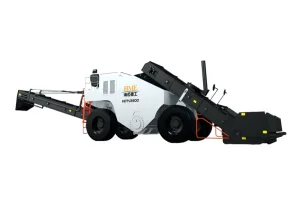
The global road construction ecosystem requires seamless integration between paving machinery, asphalt formulation, and final surface safety installation. Founded in 1998 by a distinguished group of professors from Chang'an University—China's premiere academic authority in highway transportation engineering—HEM Group (originally Xi'an Hongda Communications Technology Co., Ltd.) established the benchmark for domestic research and development in road machinery.
Recognized as an official "High-Tech Enterprise" by the Shaanxi Provincial Department of Science and Technology in 2006, HEM Group has continually advanced mechanical dynamics, engine power matching, hydraulic transmission, and digital control systems. Operating through its dedicated international trade enterprise, HME TOP Machinery Equipment Co., Ltd. (est. 2017), the group provides a complete end-to-end supply chain spanning high-end paving equipment, crushing stations, and passive road safety solutions.
Pioneered by Chang'an University professors, bridging theoretical mechanical dynamics with practical highway infrastructure manufacturing.
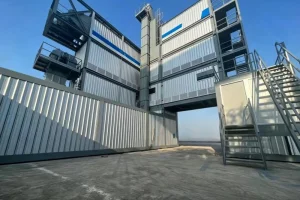
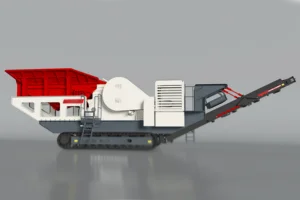
From raw aggregate processing via mobile jaw crushers to asphalt paving, surface sealing, and reflective lane delineation studs.
Delivering machinery and road safety products to over 60 countries across Asia, Africa, Europe, Australia, and the Americas.
Road reflector studs are deployed across diverse global environments, each requiring tailored material chemistry and mechanical engineering specifications to ensure prolonged operational survival.
On multi-lane intercity highways, standard paint lines wear down rapidly under heavy traffic. Heavy-duty cast aluminum studs with reinforced anchor stems are embedded at 6 to 12-meter intervals, providing tactile vibration feedback ("rumble effect") and long-range optical delineation up to 300 meters ahead.
High-altitude highways subject to dense cloud cover and heavy rainfall utilize active solar LED studs. Generating up to 2,000 millicandela flashing signals visible through dense fog, these studs dramatically cut down head-on collisions and run-off-road accidents in precarious mountainous terrain.
Flush-mounted glass road studs and synchronized solar markers are integrated into municipal crosswalks. Interlinked with traffic signal controllers, they illuminate synchronously with pedestrian signals to warn approaching motor vehicles in low-light urban zones.
For haulage roads carrying ultra-heavy mining vehicles and aggregate haulers, specialized solid steel or high-tonnage aluminum studs are deployed. Tested to withstand extreme axle weights up to 50 tons, they maintain structural integrity despite continuous impact.
Sourcing directly from verified Chinese road reflector stud factories provides international contractors and distributors with significant cost advantages, rapid customization, and strict compliance assurance. Our streamlined export workflow ensures seamless delivery from design to job site.
Custom mold tooling for specialized dimensions, stem lengths, reflector colors (yellow, white, red, blue, green), and custom branded logos.
Pre-shipment batch testing covering photometric performance, salt-spray corrosion resistance, and compressive load failure limits.
Palletized, moisture-sealed container packing optimized for maritime bulk shipping to mitigate transport vibration damage.
Provision of high-performance two-component epoxy adhesives, drilling templates, and installation technical guidelines.
Detailed answers to technical and commercial queries regarding China-supplied road reflector studs and road infrastructure hardware.
ASTM D4280 is the standard specification predominantly used in North America and Latin America, defining non-plowable raised retroreflective pavement markers with strict requirements for compressive strength (minimum 6,000 lbs / 2,720 kg for small markers, but industrial aluminum studs reach 30+ tons) and coefficient of luminous intensity. EN 1463 is the European standard, split into Part 1 (Initial performance) and Part 2 (Road test performance), requiring rigorous in-situ traffic survival testing over 12 months. Chinese tier-1 factories manufacture products fully certified to both frameworks.
Stem-base studs feature an anchor rod (typically 50mm to 75mm in length) extending from the bottom plate, requiring core drilling into the asphalt/concrete road bed before filling with epoxy adhesive. This mechanical keying prevents shear failure caused by heavy snowplows or high-speed heavy truck tires. Flat-bottom studs rely solely on surface bonding with bituminous adhesive or epoxy pads, making them easier to install but less resistant to intense commercial traffic.
Two-part structural epoxy resin (A/B component) or hot-melt bituminous adhesive is recommended. Epoxy resins offer superior flexural strength and chemical resistance against road oils, salt, and UV exposure. Surface preparation requires thorough mechanical clearing of dust, moisture, and loose aggregate prior to adhesive dispensing.
Modern solar road studs engineered in China utilize low-power microcontroller circuits paired with high-efficiency supercapacitors or lithium iron phosphate (LiFePO4) batteries. Charge storage allows active LED flashing to persist for 7 to 12 consecutive rainy/cloudy days (120+ operational hours) following a single full charge cycle under ambient daylight.
Yes. Factory customization supports dual-color lens configurations (e.g., White/Red for lane delineation and verge warning, Yellow/Yellow for median boundaries, or Blue for emergency access points). Lenses utilize UV-stabilized optical PMMA to prevent color fading or yellowing over extended outdoor service.
Standard Minimum Order Quantities (MOQ) start at 1,000 units for standard aluminum or polycarbonate studs, and 500 units for active solar studs. Lead time for standard production runs ranges between 10 to 15 business days, with full containerload (FCL) shipments accommodated efficiently via major ports such as Qingdao, Shanghai, or Ningbo.
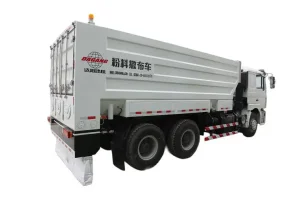
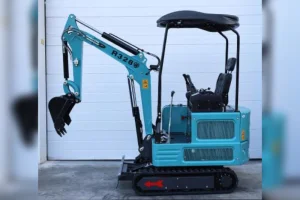
Complementary machinery and specialized civil engineering hardware manufactured to rigorous international standards.
 HME Machinery