Direct supply from specialized manufacturing hubs offering certified engineering durability and OEM precision.


An engineering deep-dive into micro-prismatic optics, heavy-axle shear performance, retroreflectivity standards, and smart highway integration.
Raised Pavement Markers (RPMs), commonly referred to as road studs, cat's eyes, or lane delineators, represent a foundational pillar of passive road safety infrastructure. Positioned strategically along longitudinal pavement markings, centerlines, edge lines, and ramp gore areas, RPMs provide indispensable visual and tactile guidance to drivers, particularly under adverse weather conditions, dense fog, torrential rainfall, and low-light night driving. Modern highway engineering demands markers that achieve extraordinary retroreflectance while maintaining extreme structural integrity against repeated impact from heavy commercial vehicles (exceeding 30-ton axle load stresses).
Unlike standard diffuse reflection found in basic paint markings, RPMs utilize high-precision micro-prismatic optical elements or vacuum-evaporated glass lenses. Micro-prismatic lenses operate on Total Internal Reflection (TIR) principles, returning vehicle headlight beams directly toward the driver's eye-ellipse rather than scattering light indiscriminately. Optical performance is strictly governed by global safety codes such as ASTM D4280 (Standard Specification for Extended Life Raised Retroreflective Pavement Markers) and European Standard EN 1463-1/2.
| Marker Class / Material Type | Compressive Strength (kN) | Specific Intensity ($R_A$ mcd/lx) | Primary Application Field | Expected Lifespan |
|---|---|---|---|---|
| Cast Aluminum Shell (A380) + PMMA Optics | > 250 kN (Heavy Freight Class) | 500 - 800 mcd/lx (Crystal/Yellow) | Interstate Freeways, Heavy Mining Routes | 5 to 8 Years |
| ABS High-Impact Polymeric Body | > 150 kN (Standard Load) | 350 - 550 mcd/lx | Urban Arterial Roads, Municipal Lanes | 3 to 5 Years |
| Tempered Glass Solid Dome (360° Cat Eye) | > 300 kN (Extreme Load) | 150 - 300 mcd/lx (Omnidirectional) | Roundabouts, Pedestrian Zones, Tunnels | 8 to 10+ Years |
| Active Solar-LED Intelligent Marker | > 200 kN (Reinforced Shell) | Active Light Output (> 2000 mcd) | High-Fog Pass Curves, Blackspot Hazards | 4 to 7 Years (Lithium-Iron) |
A primary failure mode of road markers is shear detachment caused by high-speed vehicle impact, snowplow blades, and severe thermal expansion mismatch between the marker housing and asphalt pavement. Enterprise-grade suppliers utilize specialized structural designs featuring engineered rib patterns, textured base plates, and epoxy anchor shanks. When installed with hot-melt bituminous adhesive or structural two-part epoxy resin, these anchors distribute impact energy across a wide stress cone within the road base material.
Rooted in elite traffic engineering institutions, pioneering industrial road equipment & traffic safety hardware.
HEM Group was founded in 1998 by professors from Chang'an University—the premier hub for highway engineering research in China. Originally established as Xi'an Hongda Communications Technology Co., Ltd., the enterprise stands as China's earliest high-tech firm focusing on independent R&D of road construction equipment and road safety hardware.
In 2017, to expand international trade and technical exchanges, HME TOP Machinery Equipment Co., Ltd. was established as a dedicated export organization, managing direct sales, specialized international project tenders, after-sales technical support, and component warehousing worldwide.
Recognized as a official "High-tech Enterprise" by the Shaanxi Provincial Department of Science and Technology in 2006, our portfolio includes groundbreaking invention patents in mechanical dynamics, engine power matching, hydraulic transmission, and micro-electronic traffic system controls.
Evolution of Raised Pavement Markers from traditional retroreflective elements to V2X connected road infrastructure.
Focusing on diamond-grade PMMA optics with quartz-coated surface protective layers to prevent abrasive wear from airborne dust and sand. Dual-component epoxy adhesion ensuring physical retention under high ADTT (Average Daily Truck Traffic).
Integrating high-refractive glass bead matrices optimized specifically for 905nm and 1550nm LiDAR wavelengths, enabling autonomous vehicle perception sensors (AV/ADAS) to detect lane boundaries seamlessly in heavy snow, fog, or blinding sun glare.
Active LED road studs powered by micro-piezoelectric pavement vibration modules and ultra-efficient solar cells, transmitting real-time road temperature, surface moisture, and hazard alerts to connected vehicles (V2I communication protocols).
Engineered to perform in extreme climate zones ranging from sub-zero Arctic freeze to arid desert heat.
In high-altitude alpine regions subjected to sudden fog and heavy condensation, passive reflective markers are supplemented by active solar-powered LED studs emitting flashing yellow or red guidance light visible over 800 meters, effectively preventing pile-ups on tight curve radii.
Industrial haul routes and intermodal freight terminals require cast aluminum A380 markers engineered with structural compressive resistance exceeding 250 to 300 kN, resisting deformation even under extreme wheel loads from loaded excavators, wheel loaders, and heavy semi-trailers.
For high-latitude regions in Northern Europe and North America where steel-blade snowplows operate continuously during winter, flush-mount snowplowable road markers housed within cast-iron protective castings recess below the pavement surface to prevent plow blade destruction.
Scale manufacturing capacity combined with strict quality assurance to guarantee cost stability and prompt global delivery.
We source top-tier optical grade PMMA (poly-methyl methacrylate) from certified chemical partners, paired with high-purity virgin aluminum alloys. Every batch of polymer undergo accelerated UV aging testing and impact toughness evaluation.
Utilizing high-precision robotic injection molding, automated reflective sheet sonic welding, and robotic vacuum resin potting, our manufacturing facility yields over 5,000 sets of specialized equipment and millions of road hardware components annually.
Every product line undergoes rigorous photometric goniometer testing, universal testing machine compression up to 30 tons, thermal shock cycling (-40°C to +80°C), and IP68 water ingress validation before factory clearance.
Serving government transport departments, major road contractors, and infrastructure developers across 60+ nations.
Our heavy equipment and road safety products are actively deployed in key global construction projects spanning over 60 countries and regions, including India, Sri Lanka, Indonesia, Nigeria, South Africa, Eritrea, Mozambique, Congo, Australia, Fiji, Bolivia, Russia, Malaysia, Uzbekistan, Ghana, Kenya, and beyond.
To deliver rapid response times and minimize equipment operational downtime, local support networks and spare parts warehouses are active in primary operational regions including Russia, Malaysia, South Africa, Uzbekistan, Ghana, Kenya, Indonesia, and Sri Lanka.
Expert insights on product specification, installation procedures, and quality standards for road safety procurement.
ASTM D4280 is the North American standard governing non-plowable and plowable raised retroreflective pavement markers, specifying stringent optical performance across wide observation angles, flexural strength, and compressive resistance. EN 1463 is the European standard divided into initial performance (EN 1463-1) and road test performance (EN 1463-2). Our markers are manufactured and tested to meet or exceed both standard frameworks depending on contract requirements.
Proper surface preparation is crucial. Asphalt surfaces require thorough air-sweeping or sandblasting to remove dust and oil residue, followed by application of hot-pour bituminous adhesive or two-part epoxy at 180°C to 190°C. For concrete substrates, moisture testing is essential; a dedicated structural epoxy adhesive must be used, ensuring complete coverage under the marker's textured base plate to eliminate micro-voids.
Cast aluminum (grade A380) studs possess a compressive strength rating exceeding 250 to 300 kN, making them virtually indestructible under heavy commercial truck tire impact. While ABS plastic studs offer a cost-effective solution for low-speed urban streets, cast aluminum markers provide superior long-term ROI on major interstates and freight corridors subject to extreme axle loading.
Our active solar LED pavement markers feature high-efficiency monocrystalline solar cells coupled with high-capacity Lithium Iron Phosphate ($LiFePO_4$) or Ni-MH battery units. Engineered with low-power microcontrollers, they achieve a continuous operational autonomy of up to 120 to 160 hours without direct sunlight exposure once fully charged.
Yes, with over 20 years of dedicated manufacturing and engineering design capability, we offer comprehensive OEM and ODM services. Customizations include specific housing colorways, mono-directional or bi-directional lens configurations (Crystal, Amber, Red, Green, Blue), customized anchor shank lengths, and laser-etched branding for regional distributors.
We offer end-to-end technical support including installation method statements, adhesive selection matrices, on-site technician training, and 24/7 online technical assistance. Furthermore, our localized service teams in regions such as Russia, Malaysia, South Africa, and Indonesia ensure rapid dispatch of technical personnel and spare parts.
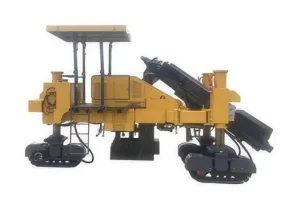
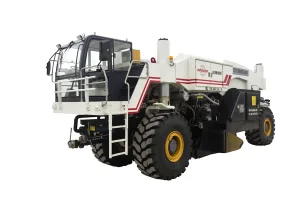
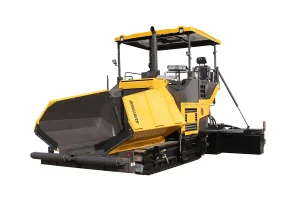
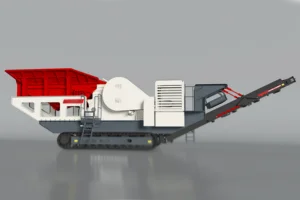
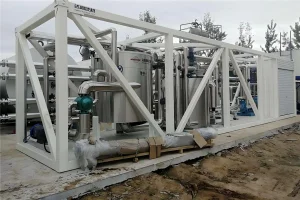
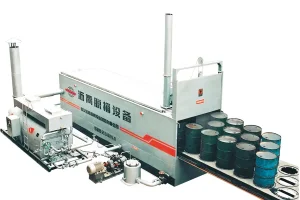
Integrate road markers with our industry-leading road maintenance machinery catalog.
 HME Machinery